
WHAT WE HAVE ACCOMPLISHED SO FAR
Sometimes we forget that there was a time before the Internet. That makes it worth noting that during the time Jesse and I spent crossing Ontario in 1995 and during my walk across Canada in 1998—we did not have—a website.
In those days the only way to make a donation was with a cheque, an envelope and a stamp—or—to come to the side of road, and guess what?
Thousands and thousands of people did just that!
Over the years, we have become better and better at funding research. We have now funded more than 100 projects in 17 countries around the world.
Granted To Research
Projects Funded
Countries Reached
Years Of Impact
In 2025 we marked the 30th anniversary of how we got started with that wheelchair journey across Ontario, by granting our 20-millionth dollar to research from the Jesse Davidson Endowment.
You might ask this question. What are the major stepping stones that have been reached?
A couple of them happened long before I was born. In 1830 a Scottish surgeon—Sir Charles Bell—noted in an essay a disease that led to the progressive weakening of muscles in boys.
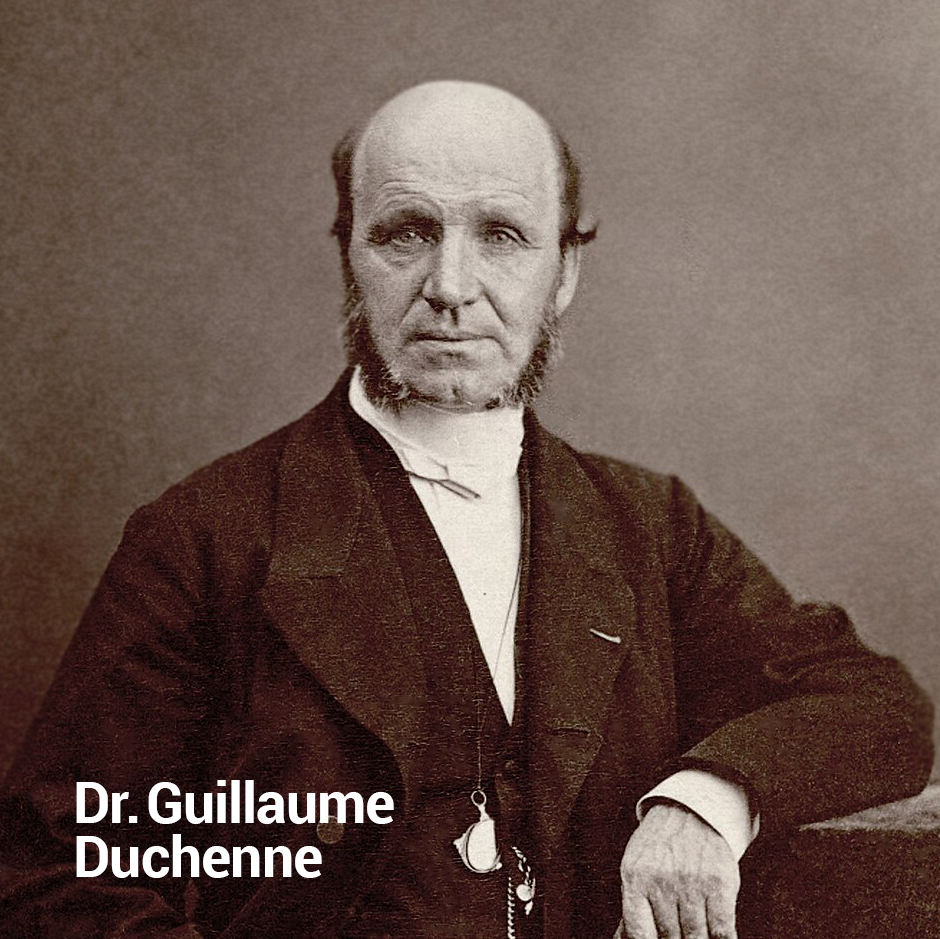
It wasn’t until 1868 that French doctor Guillaume Duchenne became the first person to give a comprehensive account of 13 boys affected by a severe disease—which would later be referred to as Duchenne muscular dystrophy.
For the next 118 years that was about all we knew about Duchenne muscular dystrophy.

In my lifetime things began to really speed up.
The double-helix of DNA—which we have probably all seen that looks a bit like a twisted ladder—was discovered in 1953 by Drs. James Watson and Francis Crick. I think this was really the first modern milestone in the history of science.
The first major breakthrough on the Duchenne muscular dystrophy research front came in 1986 when the faulty gene that causes Duchenne muscular dystrophy—was identified.
Things continued to speed up when The Human Genome Project was completed well ahead of time and has helped us understand our complete genetic blueprint.
Research is moving forward from some of the earlier drugs that helped by slowing the progress of the disease.
Research is now focusing on things like gene therapy, exon skipping, and CRISPR, and several treatments have gained FDA approval in the United States.
In Canada—Health Canada has recently approved a drug that Defeat Duchenne Canada invested in almost five years ago. This is the first Duchenne drug to be approved for boys in Canada.

What began as Jesse’s Journey has grown into Defeat Duchenne Canada—a coast-to-coast-to coast “Family of families” united in the fight against Duchenne muscular dystrophy.
While Jesse did not live to see many of the advances taking place today, the organization he inspired continues to make significant strides in funding research and supporting families.
None of this would be possible without people like you, and your family and friends, whose generosity helps drive research forward.
I hope this has helped tell a small part of the story of how we arrived at where we are today.
Thank you very much for all that you are doing to help us create a world without Duchenne muscular dystrophy.

John Davidson
Jesse’s Dad